
Dual-Fuel Generators: How Gas-Diesel Blending Cuts Fuel Cost
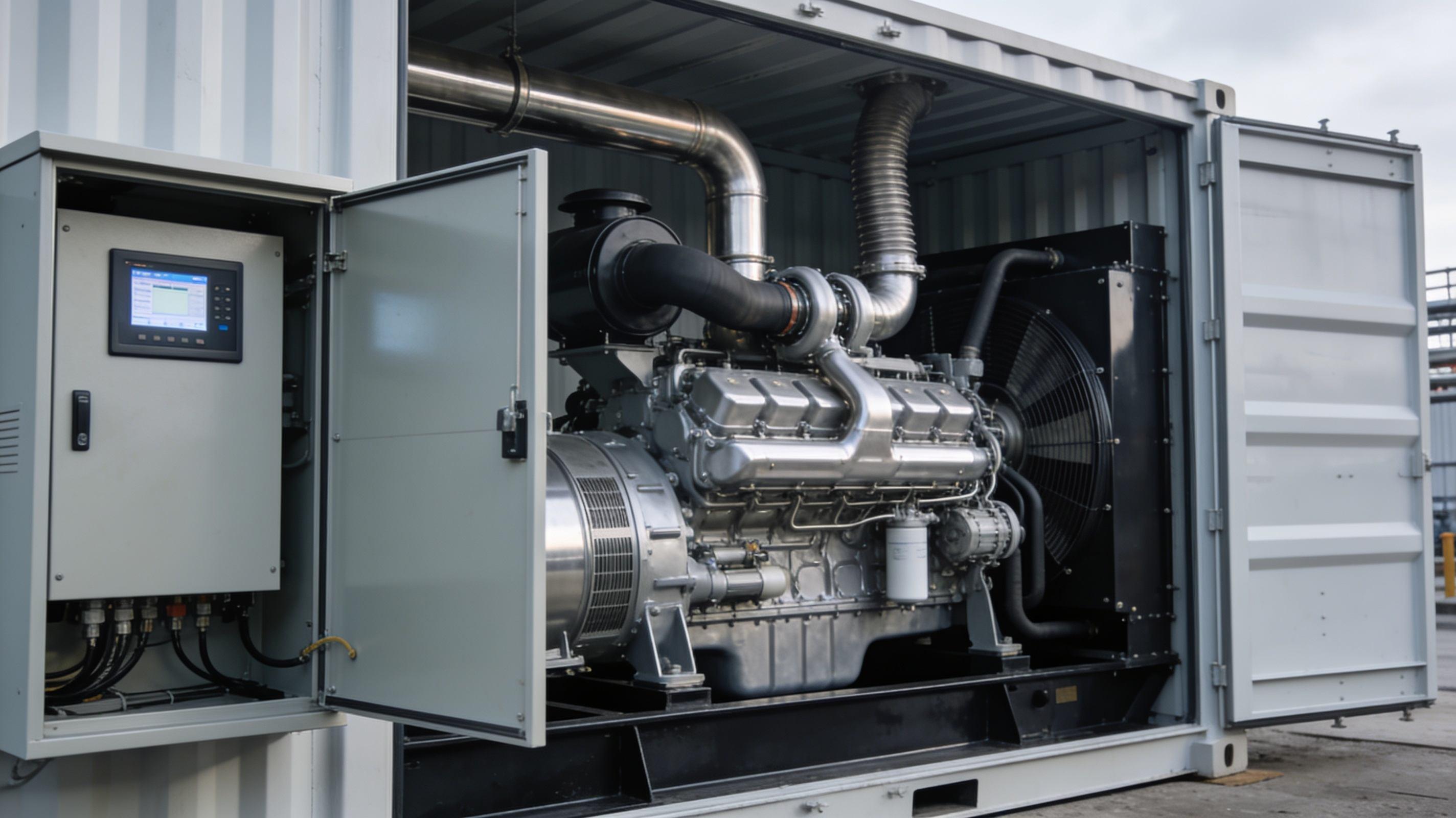
A dual-fuel set blends diesel with gas in the combustion chamber, substituting up to about 70% of the diesel with gas. Where gas is already on site, that cuts running cost without giving up diesel reliability.
A dual-fuel generator runs on a blend of diesel and gas, using a small amount of diesel to ignite a larger charge of gas in the chamber. Substitution can reach about 70% gas, so where gas is already piped or flared on site, running cost falls while the diesel injection keeps starting and load acceptance reliable. See the full gas and dual-fuel range for the build options.
What dual-fuel means
Dual-fuel is not a switch between two fuels, it is blending in one engine. A pilot quantity of diesel is injected and auto-ignites as normal; the gas, metered into the intake, burns on that diesel flame. The engine still starts on diesel and still accepts load the way a diesel does, which is the main reason operators choose it over a pure gas set where gas supply is intermittent.
How the blending works
- Diesel pilot. A reduced diesel injection provides ignition, so starting and load acceptance behave like a diesel engine.
- Gas admission. Gas is metered into the air intake and drawn into the chamber, replacing most of the diesel energy.
- Substitution ratio. The share of energy from gas typically reaches up to about 70%, depending on load and gas quality.
- Fallback. If gas pressure or quality drops, the set reverts toward diesel operation and keeps running.
Where dual-fuel pays off
The saving depends on the gas price and the running hours, exactly as with a pure gas set. The advantage over full gas is reliability where the gas supply is not perfectly steady, and the advantage over pure diesel is fuel cost where gas is cheap or free.
- Flare and associated gas at oilfields and landfills, turning a disposal cost into power.
- Biogas from digesters and waste water, where the gas is already being produced on site.
- Piped natural gas where the local gas price undercuts diesel per unit of energy.
- Sites with high running hours, where the substitution saving compounds across the year.
What you need on site
Dual-fuel adds a gas train and safety system to a diesel base. The gas must be analysed and the supply confirmed at the engine inlet, not at the meter, before the set is specified. These are the same requirements as a full gas set, detailed in the fuel planning context.
| Requirement | Why it matters |
|---|---|
| Gas composition analysis | Methane content and contaminants set the gas train |
| Supply pressure at inlet | Measured at the engine, not the meter, to size regulation |
| Gas detection and ventilation | Rated for the enclosure the set sits in |
| Heat recovery plan | Jacket and exhaust heat can be used on site |
We do not publish a fixed saving figure, because it depends entirely on your gas price and running hours. Send both numbers with your enquiry and the comparison is arithmetic, not a claim. The same caveat applies to the pure-gas case.
Questions buyers ask about dual-fuel
Frequently asked questions
Does a dual-fuel set still start reliably?
Yes. It starts on the diesel pilot, so cold starting and load acceptance behave like a diesel engine. That is the main reason to choose dual-fuel over a pure gas set where gas supply is intermittent.
How much diesel does it actually save?
Substitution typically reaches up to about 70% of energy from gas at suitable load and gas quality. The diesel saving in litres depends on the gas price and hours; we size it from your two numbers rather than quoting a fixed figure.
Is dual-fuel cleaner than diesel?
Gas combustion produces less soot and NOx than diesel, so emissions are lower where that matters near towns, hospitals or permit boundaries. The exact reduction depends on the gas and the load profile.
Can any diesel set be converted to dual-fuel?
Conversion is an engine-specific modification with a gas train, controls and safety system. It is specified per engine family and site, not bolted on afterwards, so it is best decided at order stage.
Dual-fuel or full gas?
Choose full gas where the supply is steady and you want the lowest running cost; choose dual-fuel where you want gas savings but cannot risk a gas interruption stopping the set. The gas page lays out both builds.