KINBOOST

Where the site already has gas, the running cost changes.

A gas set usually costs more to buy and less to run. Whether it pays depends on the price of the gas you already have, how many hours a year the set runs, and whether you can use the waste heat.

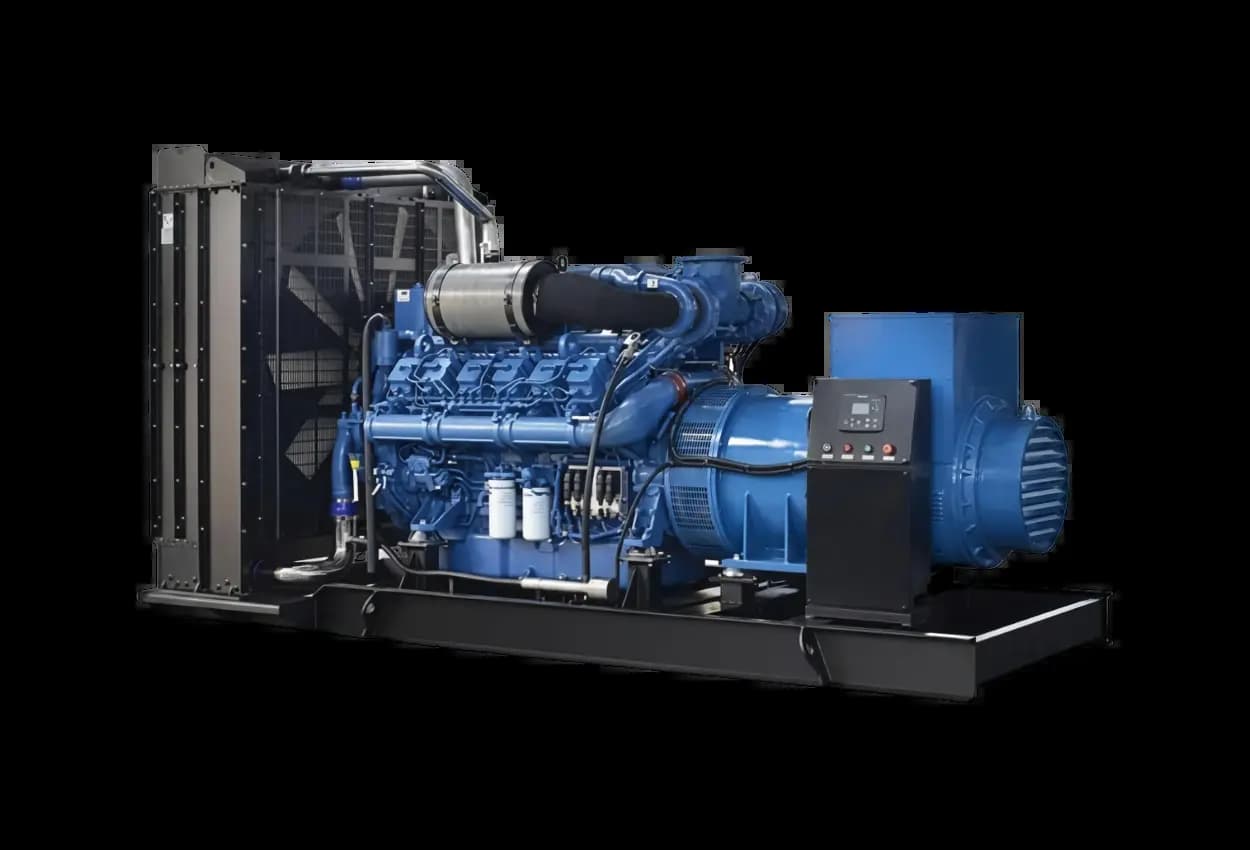
A KINBOOST gas generator set: blue engine, alternator and radiator mounted on a black base frame

The gas model range.

Eleven sets on the Yuchai gas engine platform, from 200 kW to 1000 kW. Prime output at 50 Hz; the 1000 kW unit runs at 1000 rpm. Every set is built and load-bank tested to the same standard as our diesel line.

ModelEngineFreq.Power (kW)Speed (rpm)Dimensions L×W×H (mm)Weight (kg)
KB-YC6KG-200N5LCYC6KG5020015003150 × 1320 × 16702910
KB-YC6KG-250N5LCYC6KG5025015003200 × 1320 × 16703030
KB-YC6TG-300N5LCYC6TG5030015003450 × 1400 × 18103650
KB-YC6TDG-350N5LCYC6TDG5035015003550 × 1470 × 19104270
KB-YC6TDG-400N5LCYC6TDG5040015003550 × 1470 × 19104390
KB-YC6CG-400N5LCYC6CG5040015004900 × 2560 × 28408690
KB-YC6CG-500N5LCYC6CG5050015004900 × 2560 × 28408890
KB-YC6CG-600N5LCYC6CG5060015004900 × 2560 × 28409030
KB-YC12VTDG-700N5LCYC12VTDG5070015005000 × 2560 × 29409050
KB-YC12VTDG-800N5LCYC12VTDG5080015005100 × 2560 × 29409350
KB-YC12VCG-1000N5LCYC12VCG50100010006000 × 2600 × 301517500

Power figures are prime output at the rated load and ambient; altitude, cooling and tropical derating are applied per the site before the quotation. Send your gas composition and running hours for the sized proposal.

What the gas platform is built for.

The points that separate a gas set engineered for the fuel from a diesel block converted to burn it.

One platform, many gas sources

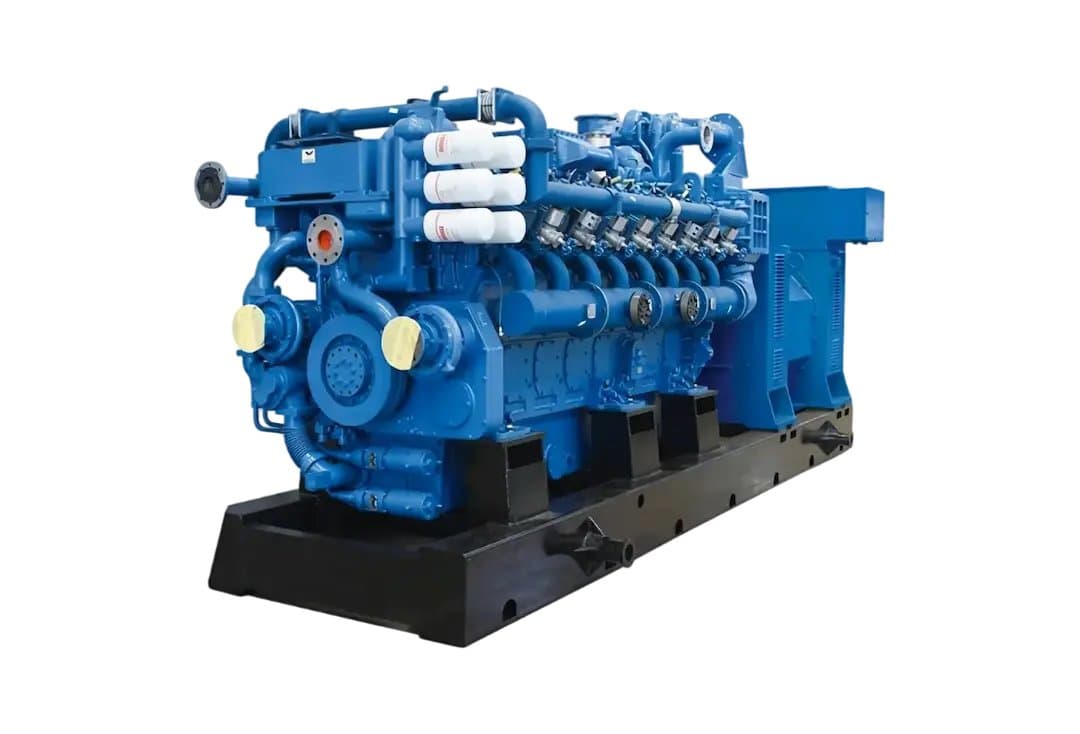
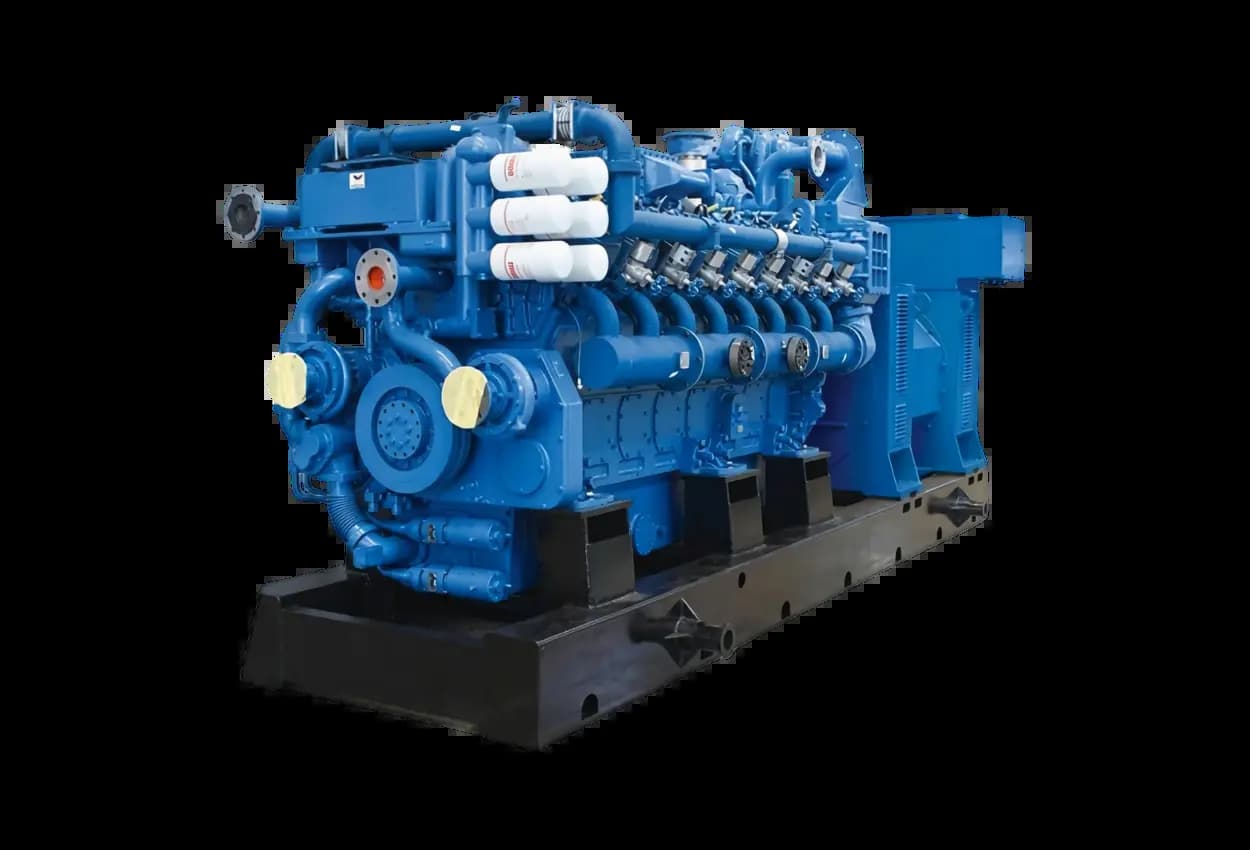
Built on the Yuchai gas engine platform, the range runs on natural gas, biogas, coalbed methane, associated (oilfield) gas and syngas. The gas train is specified per the gas composition we receive, not per a single fuel.
Engineered for gas combustion

Yuchai develops and manufactures its own high-temperature, wear-resistant materials and high-strength components for gas service, which is where a gas set differs most from a diesel block.

Long service life

The gas-specific materials and component design lift running reliability and working life well above a diesel-derivative block run on gas, which is the usual failure mode in cheaper conversions.

Overhaul interval up to 40,000 hours

Under the rated load and with the maintenance schedule we specify, the major-overhaul interval reaches up to 40,000 running hours. That figure drives lifetime cost, not the purchase price.

Four situations where gas wins.

Gas is not automatically cheaper. It wins in specific situations, and these are the four we see most often across Africa, the Middle East and Asia.

Fuel cost per running hour

Gas is normally cheaper per unit of energy than diesel in the same market. On a site running more than about 2,000 hours a year, the saving usually covers the higher purchase price inside the first years of operation.

Flare gas and associated gas

Oilfield and landfill sites often have gas they are already flaring. Generating with it turns a disposal problem into power for the camp or the process load.

Biogas and digester gas

Waste water, food processing and agricultural digesters produce gas that is ideal for continuous generation, and the waste heat can be recovered for the digester itself.

Lower emissions and permit paperwork

Gas combustion produces far less soot and NOx than diesel, which often matters more than running cost on a site near a town, a hospital or an environmental permit boundary.
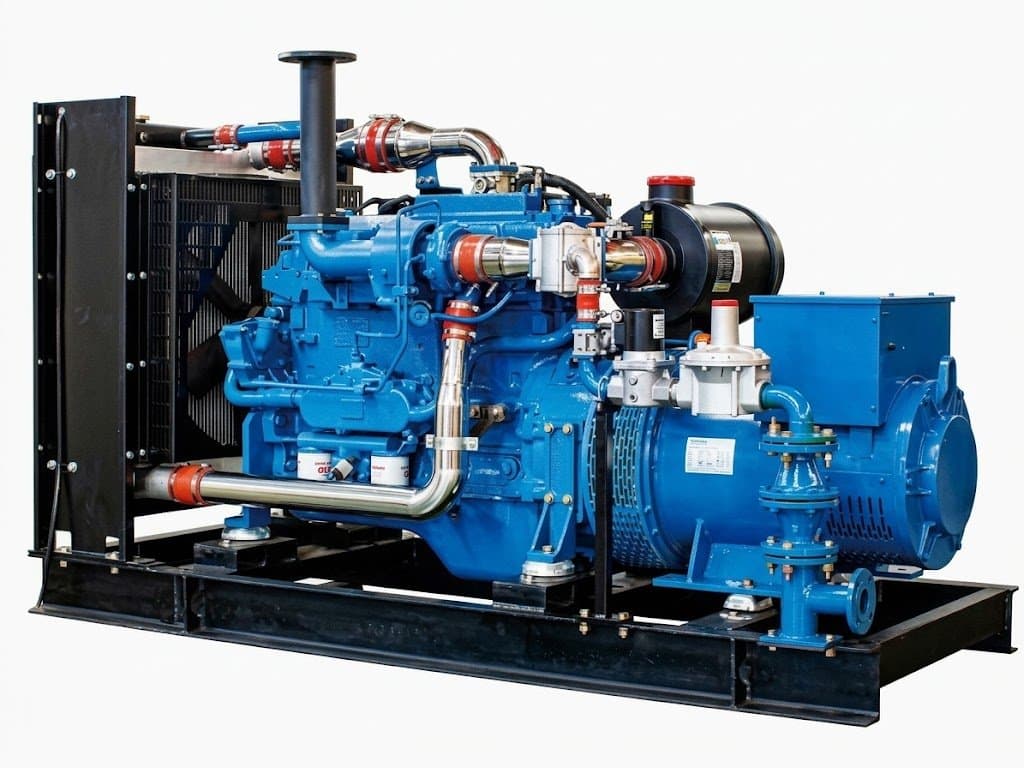
A KINBOOST gas generator set on a black base frame, engine and alternator coupled and ready for the test cell

What gas is on site decides what we build.

A gas train specified for piped natural gas is not the same as one for digester gas or flare gas. The composition analysis comes before the quotation.

Gas sourceTypical supplyInlet conditionUsual duty
Natural gasPiped mains or CNGTypically 8 to 12 bar at the engine inlet after regulationPrime or continuous
Biogas / digester gasAnaerobic digestionMethane content must be confirmed before sizingContinuous
Associated / flare gasOilfield or landfillComposition analysis required, gas train specified per siteContinuous
LPGBottled or bulkVapour draw rate checked against engine demandStandby or prime

Gas and diesel, built on the same line.

Whichever the site burns, it goes down the same assembly line and through the same load-bank test. Here is how the two compare on the numbers that matter.

Gas Generator Sets

Gas Generator Sets

Where piped gas, flare gas or biogas is available, running on gas cuts fuel cost per hour sharply, and the waste heat can be recovered for CHP or process use. We quote the gas train against your composition analysis, not a generic natural gas kit.

Output range
100 – 1600 kW
Fuel accepted
Natural gas · Biogas · LPG
Duty rating
Continuous / CHP
Diesel Generator Sets

Diesel Generator Sets

The workhorse. Fast starting, tolerant of bad fuel, serviceable by any mechanic with a spanner. Our highest-volume line and the one we keep in stock.

Output range
0 – 2000+ kW
Engine options
Cummins · Perkins · Weichai · Deutz
Duty rating
Prime / Standby

What the site has to provide.

A gas set is only as good as the gas delivery behind it. These five items sit with the site rather than with the set, and they are where gas projects most often stall.

  • A gas composition analysis before the set is specified; methane content and contaminants decide the gas train
  • Confirmed supply pressure and flow rate at the engine inlet, not at the meter
  • Gas detection and ventilation rated for the enclosure the set is installed in
  • A heat recovery plan if the site can use the jacket water and exhaust heat
  • Local gas safety approval for the installation, which sits with the site rather than the set

We will model it rather than claim it.

Send us your local diesel price, gas price and the running hours you expect per year. We will put the cost per kWh for diesel and gas side by side, then size the set around whichever wins on your numbers.

We do not publish a running-cost saving figure, because it depends entirely on the gas price and the running hours at your site. Send both numbers with your enquiry and the comparison is arithmetic rather than a claim.

Send these four things

  • Local diesel price per litre, delivered to site
  • Gas price per unit, or confirmation that the gas is currently flared
  • Expected running hours per year and the load profile
  • Where the waste heat could be used, if anywhere
Request the comparison