
Generator Derating: How Altitude and Temperature Cut Your Available Power
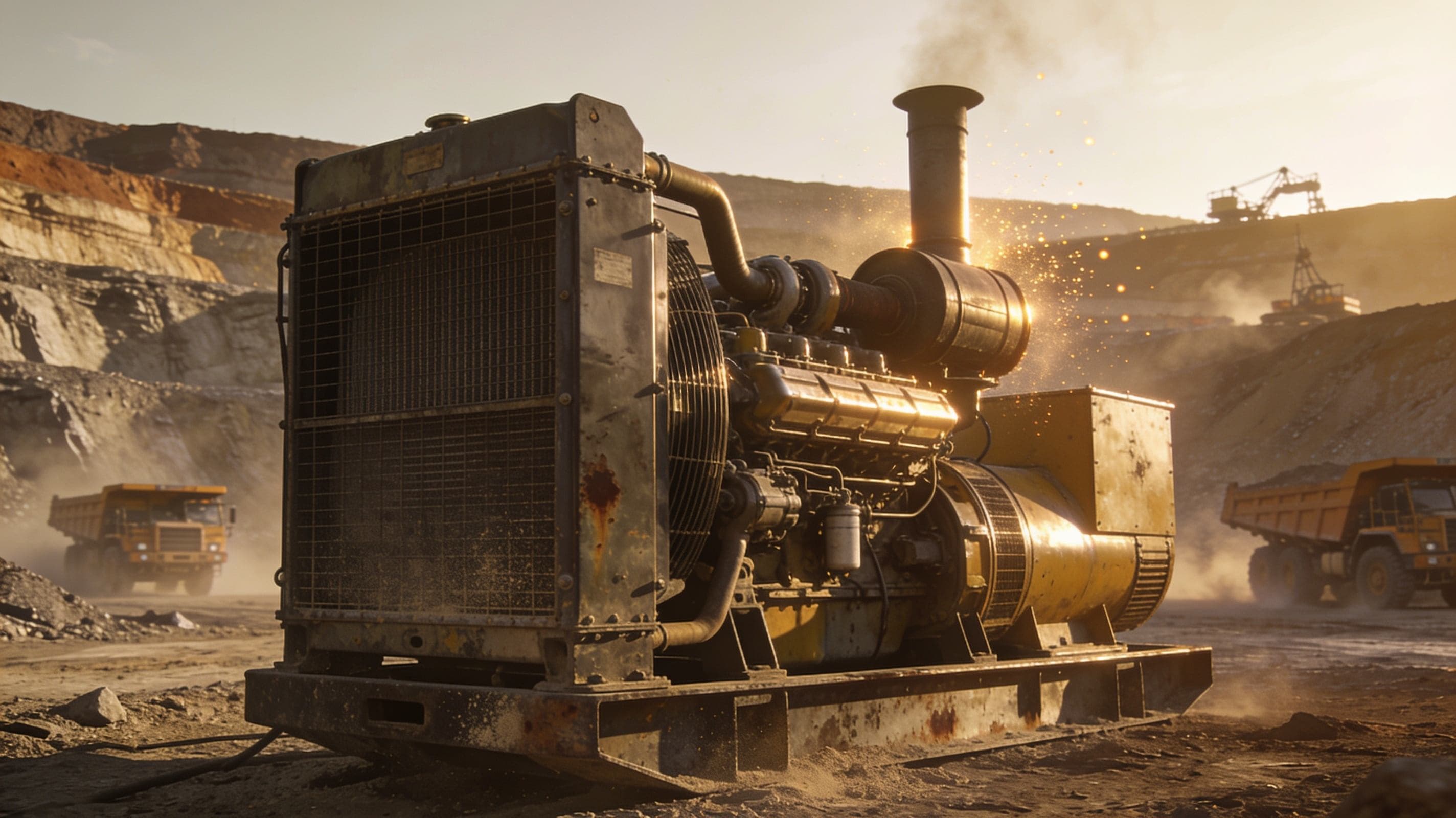
Hot, thin air makes a generator produce less than its nameplate. Use the planning factors for altitude and ambient temperature to size the set you actually need.
A generator makes less power where the air is thin and hot, because there is less oxygen to burn. At 1,500 m and 45 °C a 500 kW set delivers about 469 kW, roughly 6 percent less than the nameplate. Apply the altitude and temperature factors before you buy, or the set will trip on the load you measured. The full method is in the sizing guide.
Why derating happens
An engine is an air pump: it burns fuel with the oxygen in the air it draws in. Higher altitude means lower air density, so each intake stroke delivers less oxygen and the engine makes less power. Higher temperature also lowers air density, and it forces the cooling system to work harder. Both effects stack, which is why a high, hot site needs the largest correction. This is exactly the problem a mine or quarry site faces.
Altitude factors
These planning factors are a first-pass guide for sizing. They are not the engine manufacturer's curve, which is the authority for the set you buy and should appear on the datasheet and the load-bank test report.
| Altitude | Factor | Buy this much more nameplate |
|---|---|---|
| Sea level to 500 m | 1.00 | 0% |
| 1,000 m | 0.965 | about 4% |
| 1,500 m | 0.948 | about 5% |
| 2,000 m | 0.93 | about 7% |
| 3,000 m | 0.895 | about 11% |
Temperature factors
Temperature acts on top of altitude. Up to 40 °C the penalty is negligible, but tropical sites that sit at 45 to 50 °C for the season that matters most lose a further 1 to 2 percent. Apply both factors together.
| Ambient | Factor |
|---|---|
| 25 °C | 1.00 |
| 40 °C | 1.00 |
| 45 °C | 0.99 |
| 50 °C | 0.98 |
Worked example
Take a set rated 500 kW prime at reference conditions and put it on a site at 1,500 m and 45 °C. Multiply the required output by each factor to find the nameplate you must buy.
| Step | Calculation | Result |
|---|---|---|
| Rated output | Nameplate | 500 kW |
| Altitude factor | x 0.948 | 474 kW |
| Ambient factor | x 0.99 | 469 kW |
| Usable at site | 500 x 0.948 x 0.99 | about 469 kW |
The 469 kW figure is usable output, not nameplate. You still buy a 500 kW set, but you must plan around 469 kW of real capacity and leave margin on top. The derating factors are a guide; the engine maker's published curve is the final authority.
Questions buyers ask about derating
Frequently asked questions
Is derating permanent or only at altitude?
It is a function of the site's air density, so it is present whenever the set runs at that altitude and temperature. A set built for a sea-level site and shipped to a high plateau will always make less there.
Can I just oversize the engine to avoid derating?
Oversizing is the practical answer, and that is exactly what the factors tell you to do: buy a larger nameplate so the derated output still covers the load. The factors are the math for how much larger.
Does derating affect the alternator too?
The alternator's electrical rating does not change with altitude, but its cooling does. In hot, thin air the alternator runs hotter, so the package's cooling capacity, not just the engine, must be specified for the site.
What if my site is only 800 m and 35 °C?
Then the correction is small: about 3 to 4 percent for altitude and none for temperature. You can size close to the nameplate with a modest margin. Apply the factors whenever you are above 1,000 m or above 40 °C.
Does humidity matter?
ISO 8528 reference conditions assume 30% relative humidity. Very high humidity slightly reduces air density, but the effect is small compared with altitude and temperature and is usually ignored in first-pass sizing.