
Sizing for 60 Hz sites: why derating is not optional above 40 °C
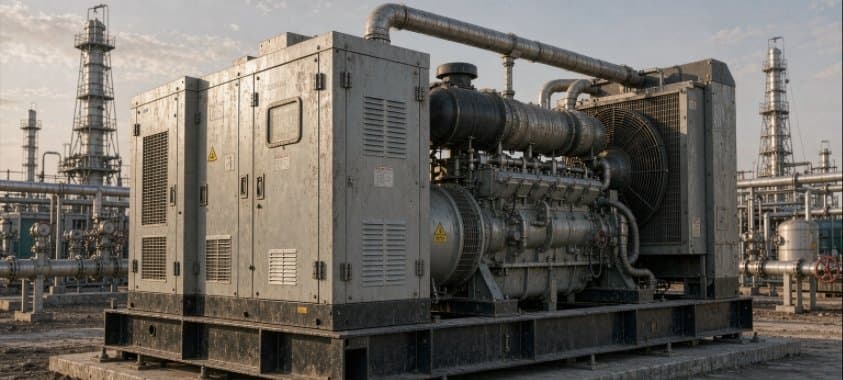
Ambient temperature and altitude quietly take power away from your set. A worked example from a 45 °C site in West Africa.
Why heat and altitude take power away
Generators lose power as the air gets hotter and the site gets higher. It is not a defect; it is physics. An engine breathes air, and thin, hot air carries less oxygen, so it makes less power. The rating on the nameplate is measured at 25 °C and sea level; most of the world is not at 25 °C and sea level. The mining sizing guide works the same numbers for a specific quarry example.
The derating rule of thumb
As a rule of thumb, derate about 3–4% per 1,000 m of altitude and about 1% for every 5 °C above 40 °C ambient. A set rated 500 kW prime at sea level can deliver closer to 400 kW on a 45 °C site at 1,500 m, a 20% haircut that catches buyers out after the container has already shipped.
A worked 45 °C site example
Worked example: a 45 °C site in West Africa at 200 m elevation. Altitude loss is negligible, but the temperature margin above 40 °C is 5 °C, costing roughly 1%. The bigger risk there is cooling: we specify oversized radiators and tropical-grade coolant so the set holds load through the afternoon peak, not just at dawn.
Always size to the load you actually have plus the derating, then add margin for future growth and motor starting surges. Sizing to nameplate and hoping is how sites end up tripping at exactly the wrong moment. Use the diesel range to pick a band that covers the derated figure.