
Yuchai Generator Buying Guide for Africa and Southeast Asia
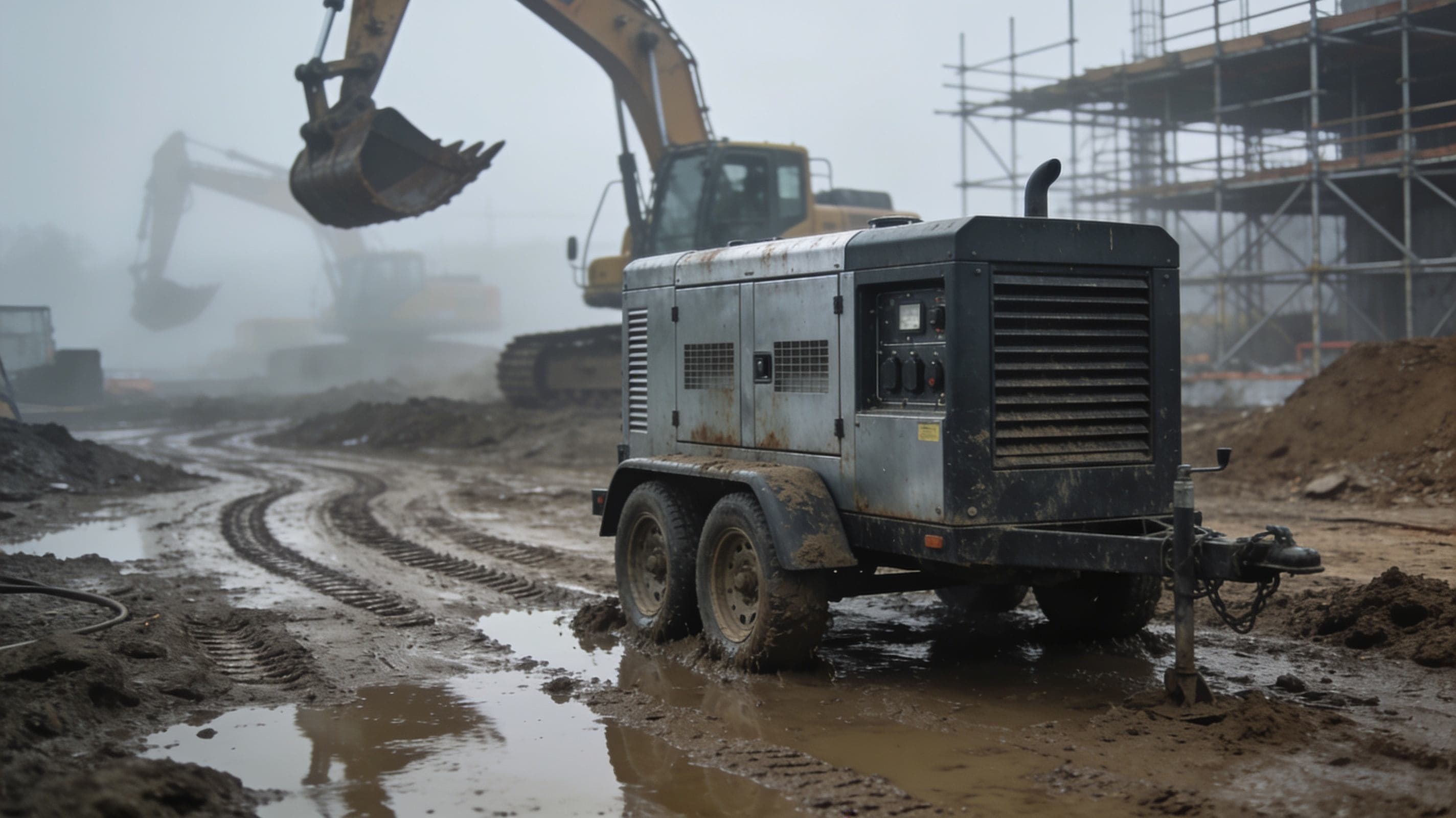
What to check before you buy a Yuchai-powered set: the series naming, the emissions variant, the alternator and controller, and the parts question that decides downtime.
Yuchai is one of the strongest Chinese engine makers in Africa and Southeast Asia, and it is a sound choice for cost-sensitive projects from roughly 10 kW to 800 kW. The series naming changes between generations, so the engine variant and its emissions standard, not the brand name, are what you should be checking on the quotation. Compare it with the Weichai guide and Shangchai 135 guide for other Chinese-platform options.
What the Yuchai series names actually tell you
Yuchai builds generator-capable engines under the YC6 and YC7 families, with the YC6YC and YC7YC designations covering most of the power range sold into export markets. Unlike the European and American makers, there is no one family per band that stays stable across years, so a model written on a quotation two years ago may not correspond to what is available now. Treat any series table as a starting point and ask for the exact variant.
| Family | Configuration | Typical band | Where it is commonly used |
|---|---|---|---|
| YC6JC | Inline 4 to 6, smaller displacement | 10 - 100 kW | Small standby, telecom, retail, small construction sites |
| YC6YC | Inline 6, mid displacement | 100 - 300 kW | Rental fleets, small industry, prime power |
| YC7YC | Inline 6, larger displacement | 300 - 800 kW | Prime power, industrial standby, larger sites |
Because the variant list moves, ask for the engine model and its rated output on the quotation rather than the family name. A quotation that says only 'Yuchai' is not a specification. The SONCAP and PVoC checklist explains why the nameplate data must match the certificate exactly.
Where a Yuchai set makes sense, and where it does not
Yuchai sets make sense when capital cost dominates the decision, when the site is within reasonable reach of a distributor, and when the duty is standby or moderate prime running. They are a weaker choice when the set will run continuously for years in a remote location, because the fuel-consumption difference against a European or American engine at high annual hours eventually outweighs the purchase-price saving. If the duty is continuous or remote, the mining and quarry sizing guide explains when to move up to a larger platform. For more ordinary sites, the construction site, agricultural irrigation and rental fleet guides show the same Yuchai families sized to their day-to-day duty.
- Good fit: standby for a commercial building, small to mid prime power, rental fleet, or a project where the budget is fixed and the running hours are modest.
- Think twice: continuous 24/7 running in a remote site, or a set where fuel cost dominates over its whole life.
- Check before ordering: whether a distributor of that brand holds parts for the exact variant near your site.
What to check before you sign
| Item | What to ask for | Why it matters |
|---|---|---|
| Engine model and rating | Exact model, kW at the stated duty, and the serial number | The family name alone is not a specification |
| Emissions standard | Stage V, Tier 4 or the local equivalent, stated on the plate | Decides whether the set can be imported and permitted at all |
| Alternator | Manufacturer, and the number of motor starts per hour it is rated for | A cheap alternator is the usual weak point in a low-cost build |
| Controller | Brand, model, and whether it offers the comms you need | Poor controllers are why some sets cannot integrate with site systems |
| Cooling package | Radiator duty at the site ambient and altitude | Decides whether rated load survives your climate |
| Warranty terms | Years, hours per year, and what is excluded | A 2-year 2,000-hour warranty is not a 3-year unlimited one |
| Parts list | A list of the consumables with part numbers | This is the document that decides your downtime |
How the total cost compares
The honest comparison is not purchase price. It is purchase price plus the fuel burned over ten years plus the downtime caused by waiting for a part. That calculation is why a Yuchai set wins at 500 running hours a year and can lose at 6,000, and it is worth doing in a spreadsheet before the order rather than after the invoice. The diesel range page lists the bands and enclosure options to compare.
Questions buyers ask about Yuchai sets
Frequently asked questions
Are Yuchai engines as reliable as European or American brands?
Reliability is broadly comparable when the engine is matched to the duty and maintained on schedule. The bigger difference between suppliers is usually the alternator, the controller and the cooling package rather than the engine itself.
Are Yuchai generator sets available in gas versions?
Gas variants exist in some models. Availability moves with the product range, so state the fuel at enquiry stage and get the variant confirmed in writing.
What emissions standard do Yuchai sets meet?
It varies by variant, with Stage V and Tier 4 options in the range. The standard must be stated on the engine nameplate, and it has to match what your destination country requires.
Can spare parts be shipped quickly to Africa?
Parts availability depends on having a distributor of that brand near your site. Ask the supplier to name the nearest distributor and confirm that they hold the parts list for your exact model.
Do Yuchai sets meet SONCAP or PVoC requirements?
The conformity scheme depends on the destination, and the certificate is issued against a specific model. The supplier prepares the pack before the container is sealed, and the nameplate data must match the certificate exactly.
Is a Yuchai set cheaper than an equivalent Cummins or Perkins set?
Generally yes at purchase, with the gap narrowing as power rises. Over a ten-year horizon the fuel consumption difference can close or reverse the saving at high annual running hours.