
Generator Controller and AVR Settings: What to Set Before Commissioning
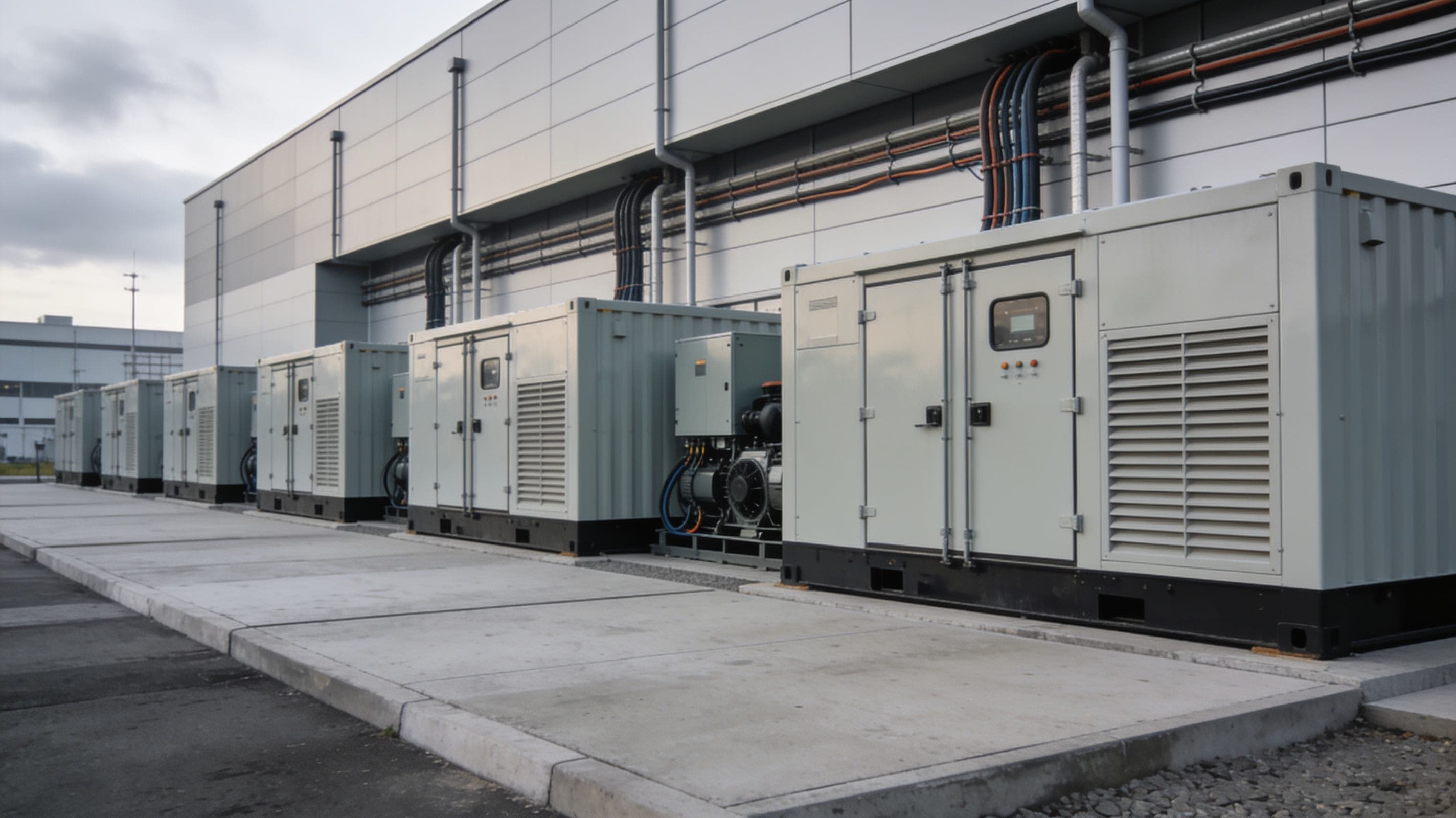
Before a set is commissioned, the controller and AVR must be set to the site: voltage, frequency, power factor, start and transfer delays, and protection thresholds. Get these wrong and the set damages its own load.
A generator set is commissioned, not just switched on. Before it carries load, the controller and the AVR must be set to the site: rated voltage and frequency, power factor, start and transfer timing, and the protection thresholds that trip before damage. These settings decide whether the set feeds the building cleanly or fights it. The ISO 8528 ratings and the sizing method set the numbers the controller has to honour, and the maintenance schedule is what keeps those settings honest over time.
What the controller and the AVR each do
The AVR, the automatic voltage regulator, holds the alternator voltage steady under changing load and recovers after a block load is applied. The controller runs the engine: start logic, speed and frequency control through the governor, protection, and the transfer of load to and from the bus. They are separate boxes with one job in common, keeping the output within tolerance so the load survives. The kVA vs kW distinction is exactly why the AVR and the governor are different controls.
The settings to confirm at commissioning
| Setting | Typical value | Why it must be right |
|---|---|---|
| Rated voltage | 400 V (or 380 / 415 per market) | Must match the site; a mismatch damages equipment |
| Frequency | 50 Hz or 60 Hz | Set by the governor; wrong value ruins motors and clocks |
| Power factor | 0.8 lagging | Standard for generator alternators; sets the real versus apparent load split |
| Start or transfer delay | 2 to 10 s | Lets the bus settle and the engine reach speed before load |
| Protection thresholds | Over and under voltage, overcurrent, overspeed | Trips the set before a fault becomes damage |
Voltage regulation and the AVR
The AVR targets a steady voltage, typically within about 1 percent once settled, and must recover after a load step without a large dip or overshoot. If it is set too tight it hunts; too loose and sensitive loads see a sag. The setting is tied to the alternator, so it is confirmed at factory test and re-checked on site where the cable length or power factor differs from the bench. The running load profile tells you how hard the AVR works in service, and the same logic appears in the dual-fuel control.
Frequency, governing and load acceptance
Frequency is engine speed, so the governor and the controller share the job. A set that drops frequency under a block load either has a weak governor setting or was undersized for the motor-starting demand. This is where sizing and commissioning meet: a set sized correctly in the duty and derating step still needs the governor tuned to accept the largest motor without stalling the bus. If the set will not start cleanly, the fault list usually points at the start circuit first.
Protection that should never be skipped
- Over and under voltage, over and under frequency: trip before the load is harmed.
- Overcurrent and earth fault: clear a short without taking the whole set down unnecessarily.
- Overspeed and low oil pressure: engine-saving trips that must be live before the first start.
- Battery and charger supervision: alerts before the set cannot start at all.
Always commission with the engine manual and the alternator data sheet open, and record the as-found and as-left values. A set that leaves the factory correct can be knocked out of tolerance by a careless keypad change on site, and the alarm log is where that shows up first. The builds on the diesel generator sets page list the controller options to specify.
Remote monitoring and comms
Most modern controllers offer Modbus, CAN or dry contacts for site monitoring, and the commissioning step should confirm the protocol the building management system expects. For a remote or unattended site such as a telecom tower or a pumping station, this is not optional: the controller is the only thing that calls for help. The telecom guide covers why unattended sets depend on it, and the storage plan relies on it to report a flat battery before the outage.
Questions buyers ask about controllers and AVR
Frequently asked questions
Can one controller run any generator?
No. The controller must match the engine, its start and governor type, and the alternator AVR signal, and be rated for the set's voltage and current. Specify it against the build, not as a generic box.
What voltage should the set be set to, 400 or 415?
Whatever the site distribution uses. Many markets rate 400 V nominal with a tolerance; 415 V is common in others. Match the building, and confirm the tolerance band with the load equipment.
Why does my set dip when a motor starts?
Starting a motor draws several times its running current, which sags voltage and dips frequency. A correctly sized set and a tuned governor recover quickly; a persistent dip means the set was undersized for the starting demand.
Do I need remote monitoring?
For any set nobody watches daily, yes. Remote alarms and run data are how you learn about a fault before the next outage finds it. It is standard on telecom, rental and remote industrial sets.
What does commissioning actually involve?
Setting and verifying voltage, frequency, power factor, start and transfer timing, and every protection threshold against the manuals, then a loaded run to prove the set holds tolerance. The records belong in the set's file with the maintenance log.
Can settings be changed later?
Yes, but only with the manuals and the rated tolerances in hand. Unrecorded changes are a common cause of nuisance trips and intermittent faults, so keep an as-left record every time.